Dawn Newspaper · November 4, 2021
Lone artisan sees Kashigari a dying art
Ustad Muhammad Wajid — the only one among his brothers still practising — speaks about preserving a 300-year family legacy in the face of modernisation.
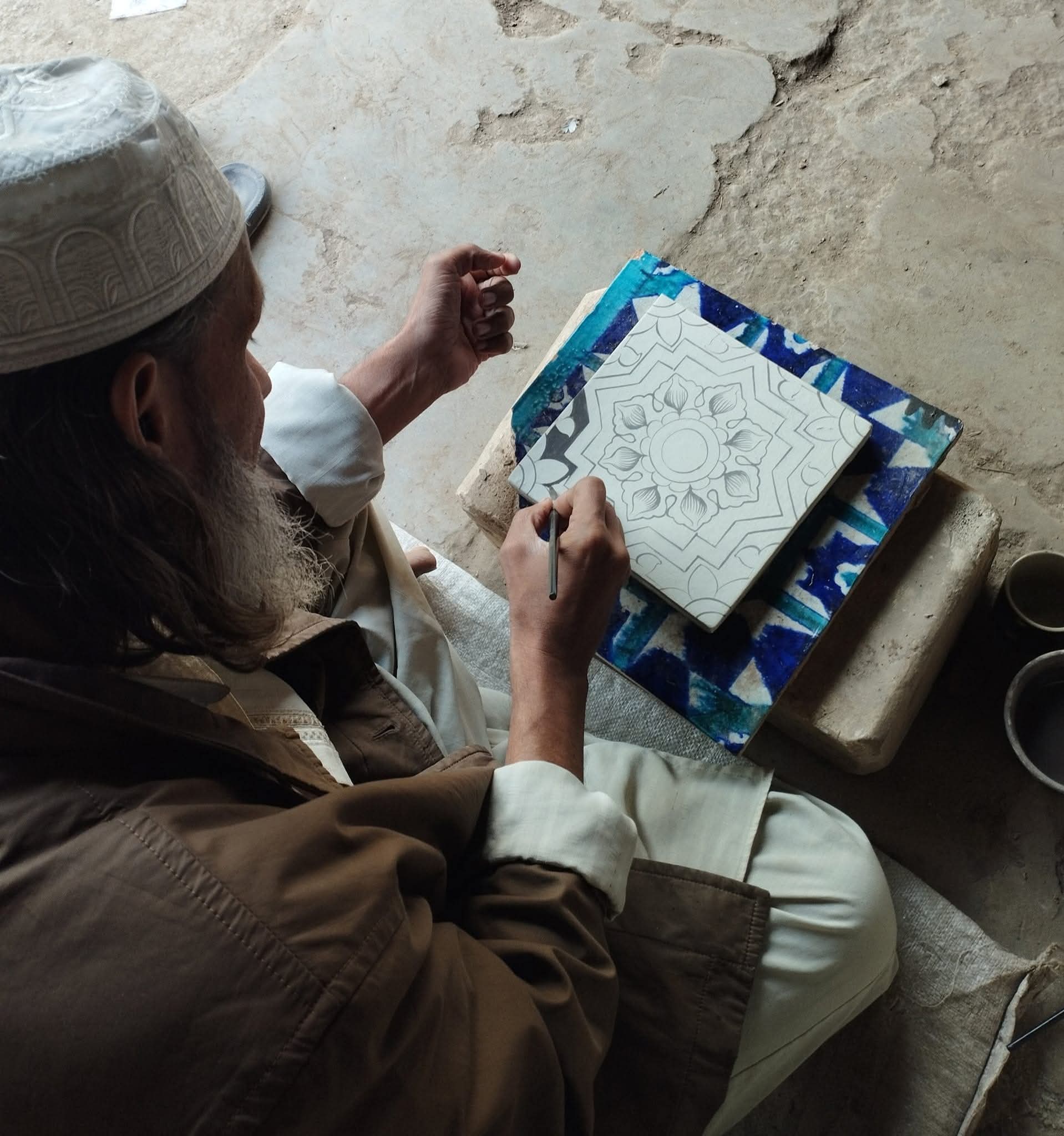
Multan, Pakistan · Est. 17th Century
Ustad Muhammad Wajid Kashigar
Seven generations of Kashikari mastery — the ancient art of hand-painted blue ceramic tiles from Multan, Pakistan.
300+
Years of Heritage
7th
Generation Craftsman
1984
Aga Khan Award
Multan
City of Shrines
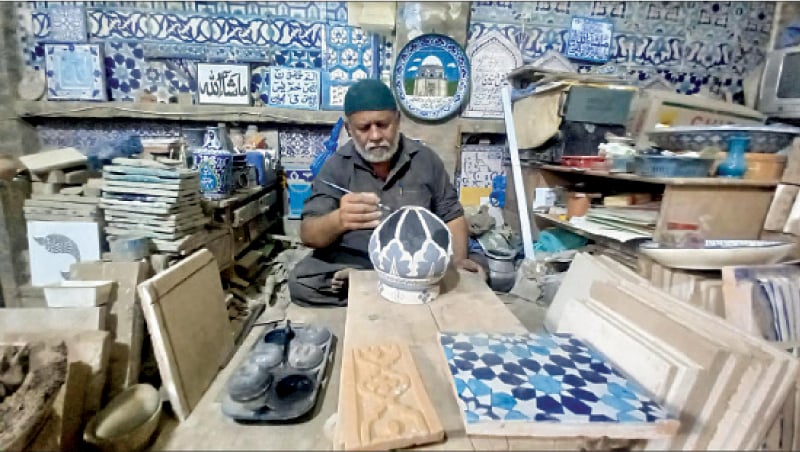
At Work
Ustad Muhammad Wajid · Multan Workshop
Master Craftsman
In the lanes of Jan Muhammad Colony, Multan, Ustad Muhammad Wajid carries forward a 300-year-old family tradition — the ancient art of Kashikari.
Born in 1964, Wajid is the sixth-generation Kashigar. His father, Ustad Allah Diwaya, received the Aga Khan Award for Architecture in 1984 for restoring the Hazrat Shah Rukn-e-Alam mausoleum.
Today, Wajid operates the city's only remaining workshop using traditional red clay — the same material his ancestors used to decorate Multan's tombs, shrines, and mosques for over three centuries.
Portfolio
Each piece is hand-drawn, pigment-filled, glazed, and kiln-fired using centuries-old techniques.
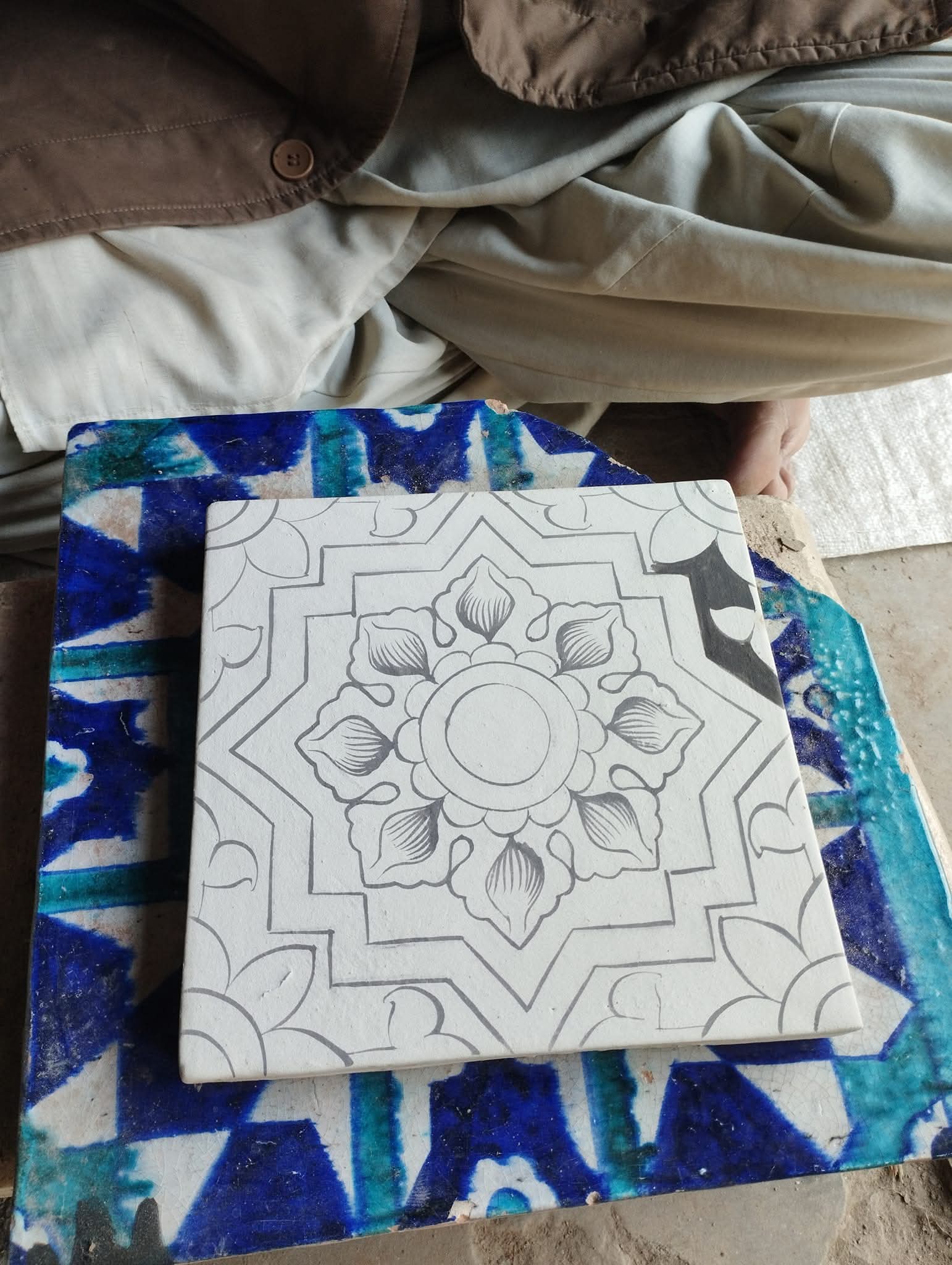
Carved Tile — Floral Motif
Traditional Kashikari · Multan
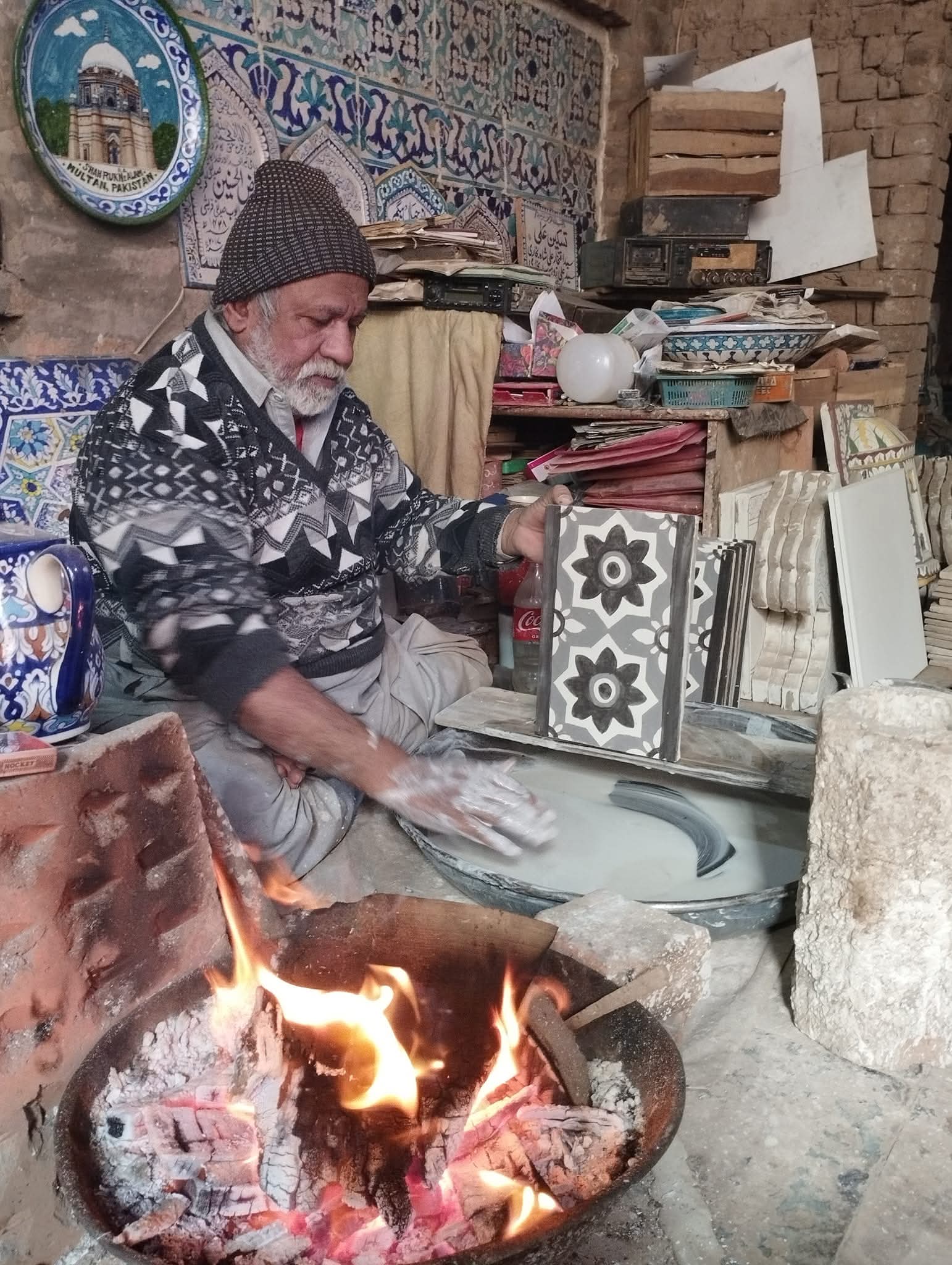
Traditional Glaze Firing
Traditional Kashikari · Multan
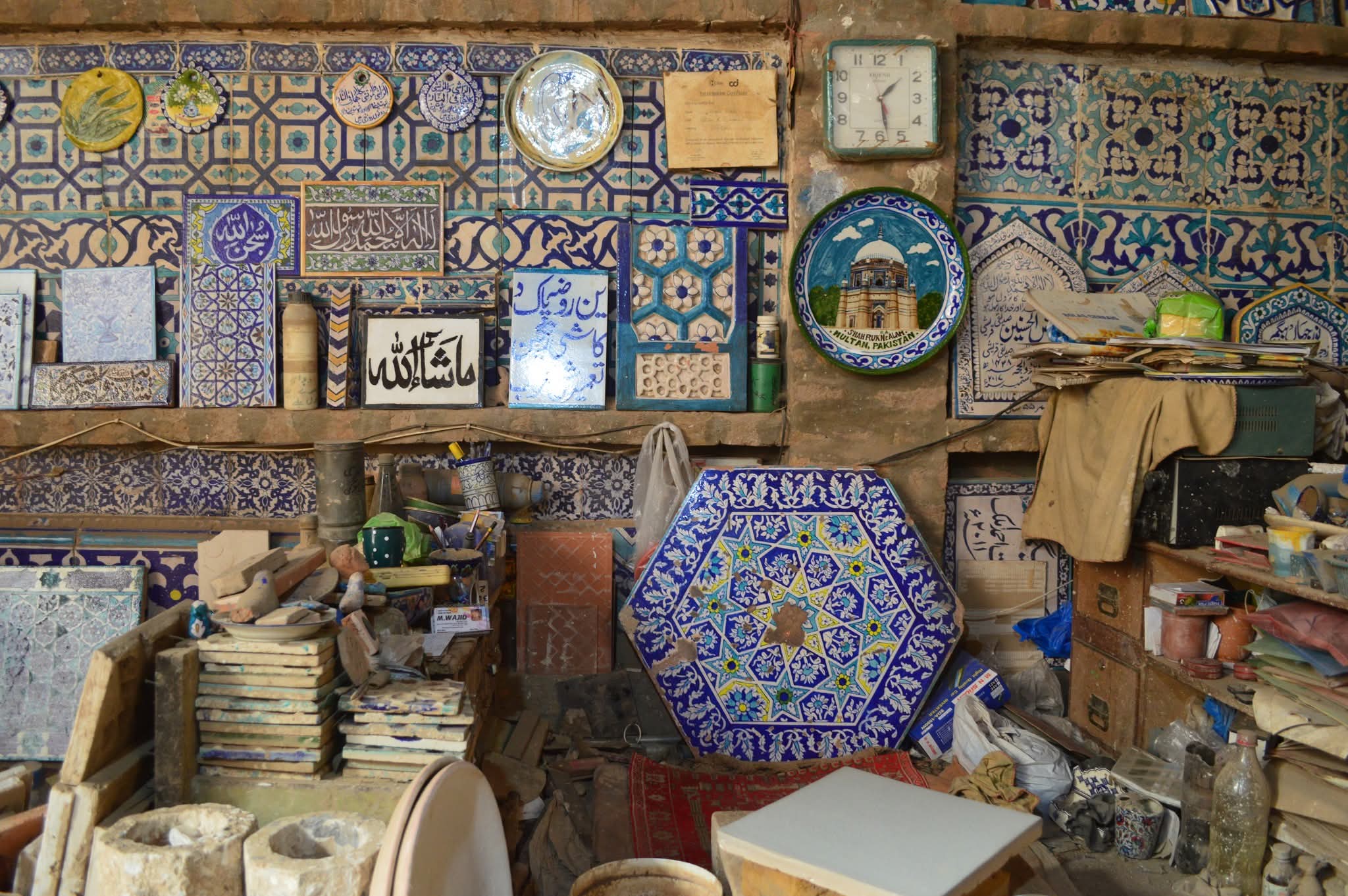
Shrine Restoration Tiles
Traditional Kashikari · Multan
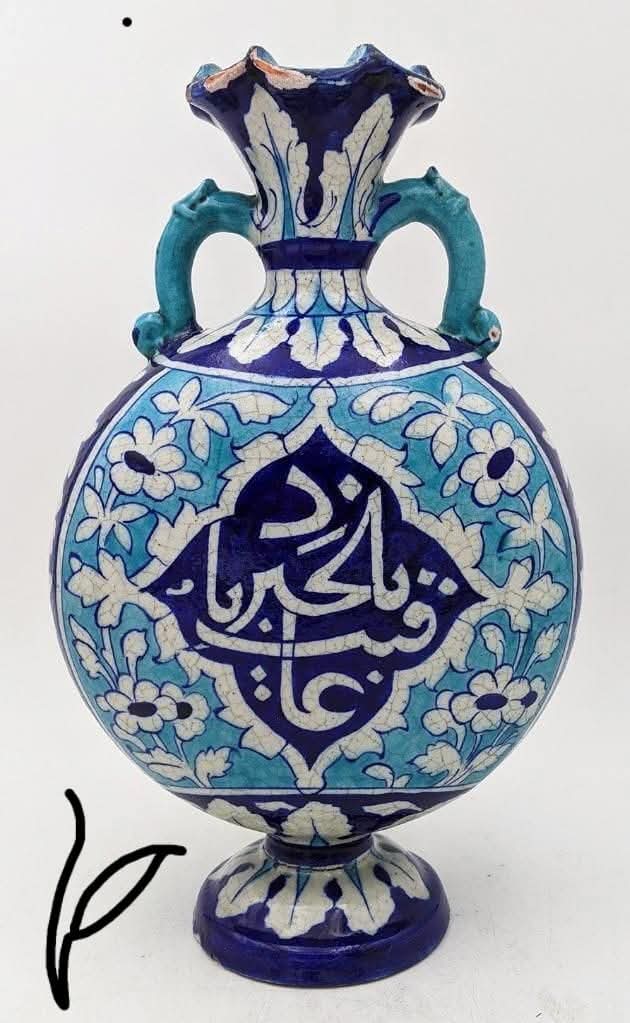
Calligraphy Vase
Traditional Kashikari · Multan
Drawing the Pattern
Traditional Kashikari · Multan
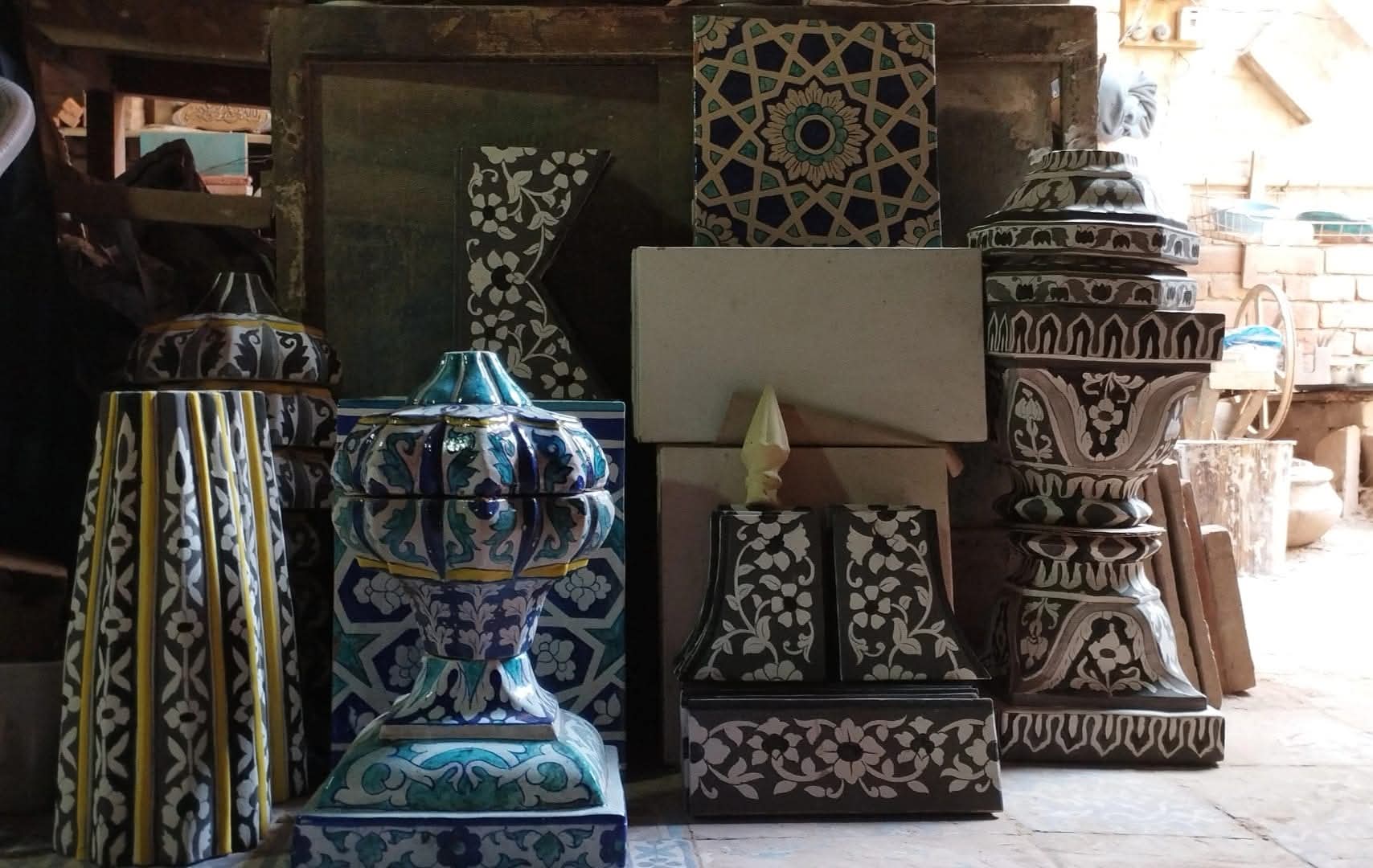
Architectural Finials
Traditional Kashikari · Multan
“The art has been transferred from one generation to another, but I’m not sure if my children will keep the tradition alive.”
Ustad Muhammad Wajid Kashigar
The Ancient Technique
A meticulous four-stage process passed through seven generations of the Kashigar family.
01
Traditional red clay is hand-shaped using moulds crafted by the family over generations — the same clay used to restore Multan's historic shrines.
02
Geometric and floral designs are hand-drawn with a fine stylus, referencing centuries-old pattern books passed within the Thaheem family.
03
Deep cobalt blue, white, and turquoise oxide pigments are applied by hand into the etched designs, creating the signature Multani palette.
04
A clear glaze is applied, then the piece is kiln-fired — locking in colour and achieving the signature luminous, water-resistant finish.
Press & Media
Dawn Newspaper · November 4, 2021
Ustad Muhammad Wajid — the only one among his brothers still practising — speaks about preserving a 300-year family legacy in the face of modernisation.
Dawn · Non-Fiction · 2024
From Ustad Hasan Bakhsh to Ubaid Wajid, a dynasty of Kashigars whose glazed tiles adorn the shrines, tombs, and mosques of Multan.
Commission a Piece
Commission a bespoke Kashikari tile panel, vase, or architectural installation. Each commission is handcrafted using authentic red clay and centuries-old techniques.