About the Artist
Ustad Muhammad Wajid Kashigar
Six generations of heritage, a lifetime of devotion, and the quiet determination of a man who refuses to let a 300-year art form disappear.
Biography
A Life Devoted to Clay
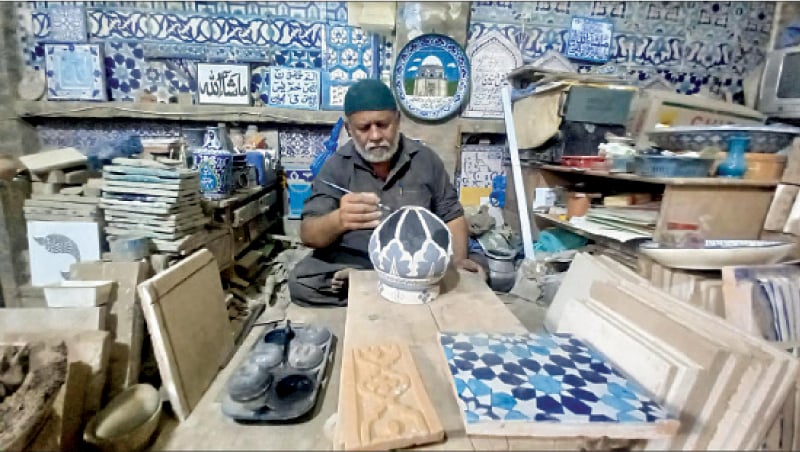
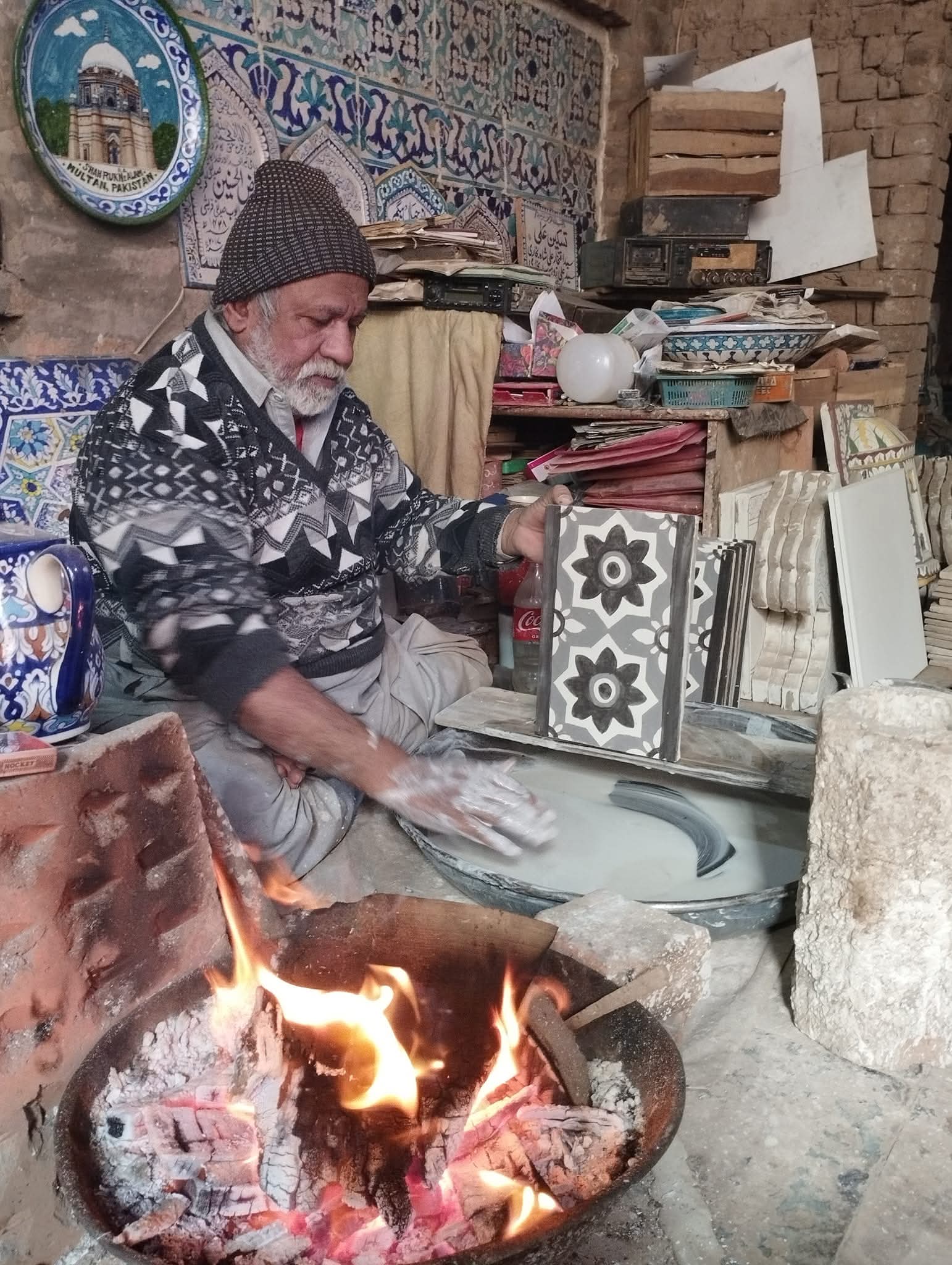
Born in 1964 in Multan's Jan Muhammad Colony, Ustad Muhammad Wajid grew up surrounded by the sounds and smells of the family workshop — the scrape of stylus on clay, the sharp mineral scent of oxide pigments, the roar of the kiln. Kashikari was not a career choice; it was a birthright.
The sixth generation of the Thaheem (Ansari) family to practice this ancient art, Wajid learned at his father's knee. His father, Ustad Allah Diwaya, was already a legendary figure — a craftsman whose restoration work on the Hazrat Shah Rukn-e-Alam mausoleum in 1985 earned the family the Aga Khan Award for Architecture in 1984, one of the world's most prestigious recognitions in the built environment.
Of the seven sons of Ustad Allah Diwaya, only Muhammad Wajid has remained. His brothers, drawn by steadier incomes elsewhere, eventually set aside their tools. Wajid stayed. “Our family used to do all kinds of work,” he says, “including the construction of the building, Kashigari (tiles), Naqashi and Gulkari.”
Today he operates the last workshop in Multan that uses traditional red clay — the authentic material that his family, and the Soomro family before them, employed for generations to tile the shrines and mosques of this ancient city.
His workshop on Masoom Shah Road doubles as his home. In the mornings, two sons attend school. In the evenings, they return to the workshop and learn the family art — keeping alive, for now, the hope of an eighth generation.
At a Glance
Artistic Philosophy
On Clay, Colour & Legacy
The Primacy of Red Clay
While the modern blue pottery industry has largely shifted to cheap China clay, Wajid insists on traditional red clay. "The products made of China clay cannot be used in the rehabilitation of historical monuments," he explains. Only red clay, fired and glazed in the ancestral manner, carries the structural and aesthetic properties needed to restore Multan's heritage architecture.
Pattern as Memory
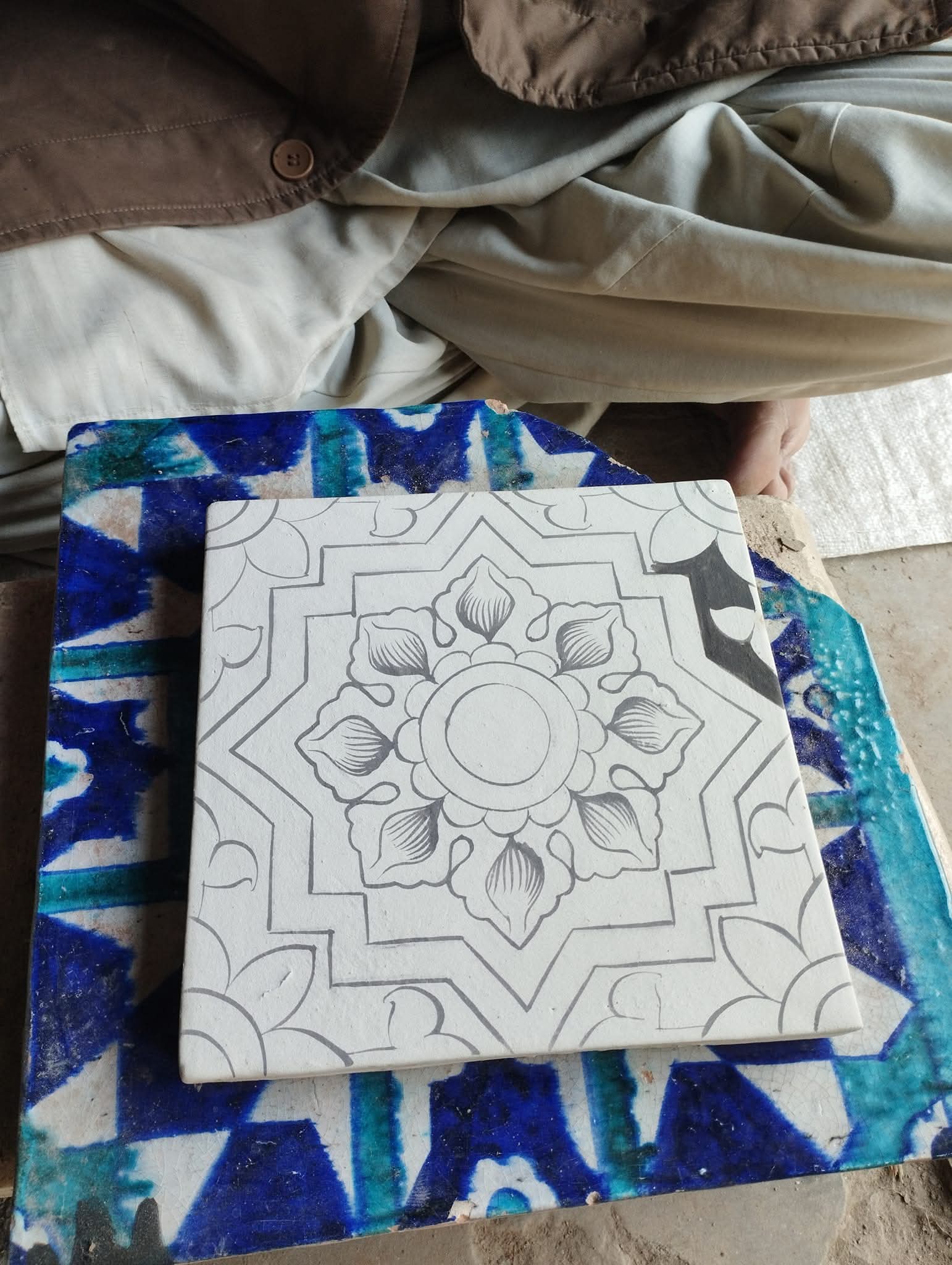
The geometric and floral designs Wajid draws are not invented — they are transcribed. Each pattern is drawn from a living catalogue of designs that exists in his family's memory, on worn pattern-books, and on the tiles of Multan's shrines. To draw a pattern is to remember the craftsman who drew it before you.
The Fear of Silence
"Art must be preserved by appointing original artists, or this art will die." Wajid has proposed a training facility for 25 students, requiring four kanals of land from the government. The Blue Pottery Institute — once a centre for authentic instruction — has, in his view, been "hijacked by profiteers" who now teach with white clay and issue diplomas to students who cannot restore a single historical monument.
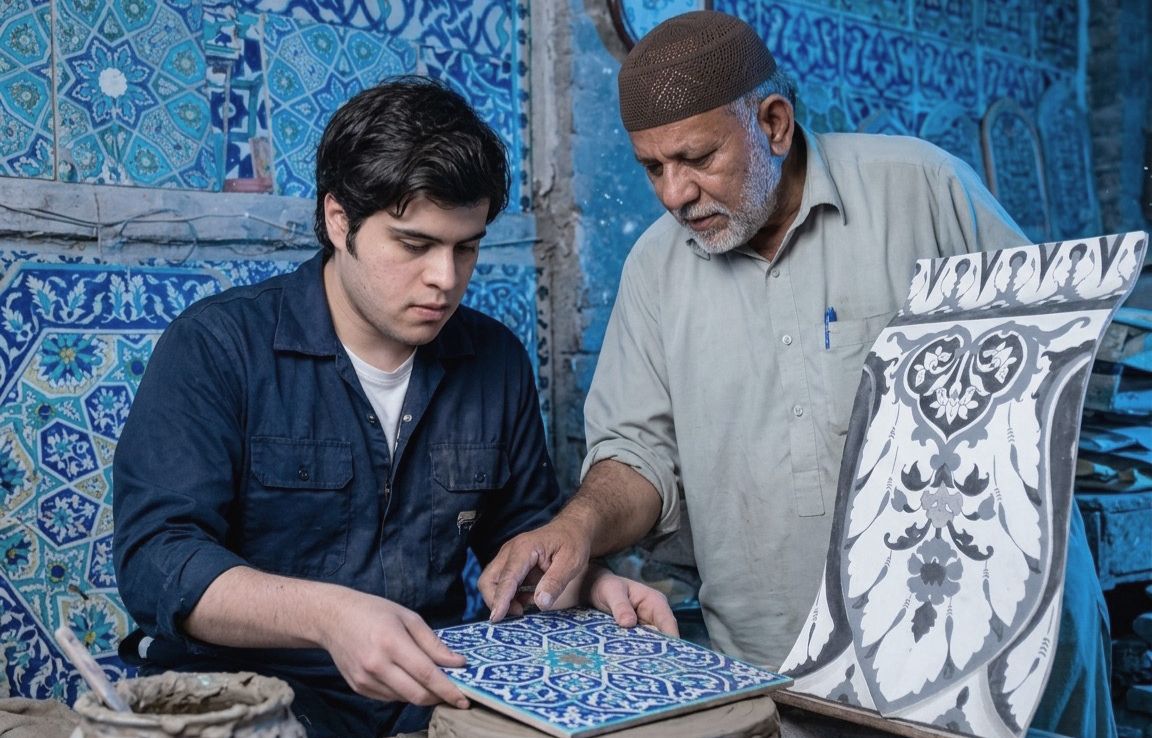
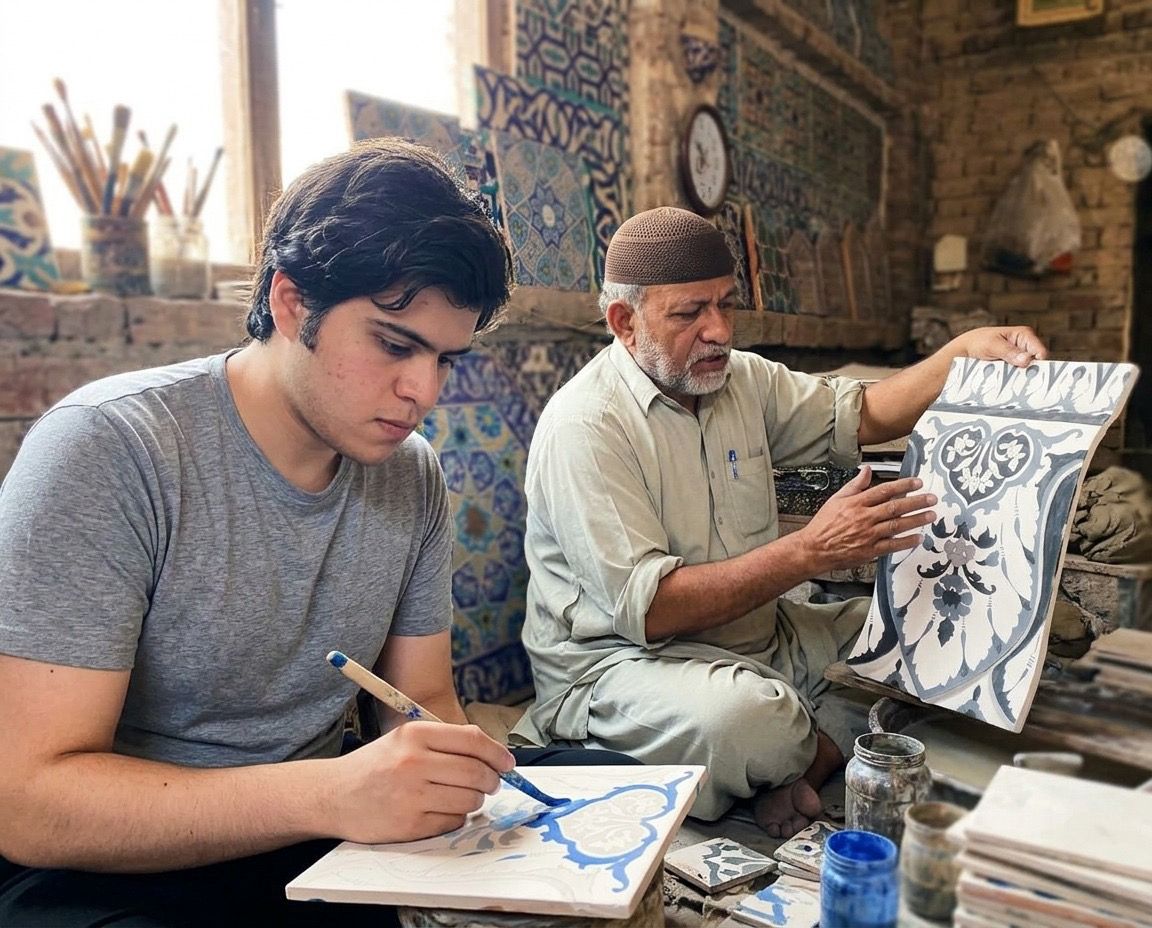
The Next Generation
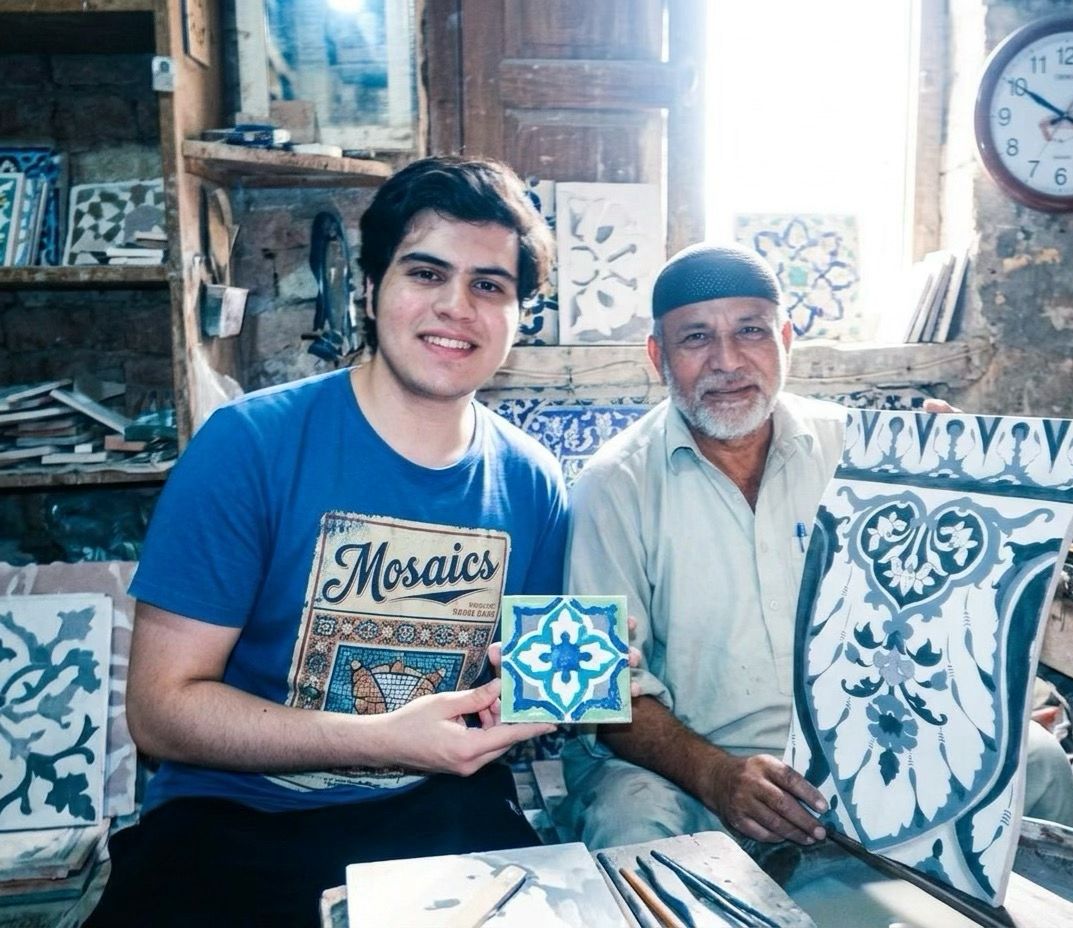
“The art has been transferred from one generation to another, but I’m not sure if my children will keep the tradition alive.”
His son, Ubaid Wajid Kashigar, is the 7th generation — learning the craft at his father's side, painting tiles in the same workshop where six generations before him honed their craft.