The Naqashi Heritage
Three Centuries of Living Art
The story of the Thaheem family — seven generations of Kashigars who have shaped the visual soul of Multan, Pakistan.
The Ancient Craft
What is Kashikari?
Kashikari — also called Kashigari — is the traditional art of hand-painting and glazing geometric and floral patterns onto ceramic surfaces.
In Sindh and Multan, the craftsman who practices this art is called a Kashigar. Multan — known as the City of Saints — has been one of South Asia's great centres of ceramic art for over a millennium, its blue-tiled shrines and mosques visible for miles across the southern Punjab plain.
The defining characteristic of authentic Multani Kashikari is the use of red clay — a harder, more durable material than the cheap China clay now widely used by commercial producers. Only red clay tiles can withstand the structural demands of monument restoration.
The signature colour palette — deep cobalt blue, white, turquoise, and occasional manganese purple — derives from natural mineral oxide pigments applied by hand before a clear glaze is poured and the piece kiln-fired.
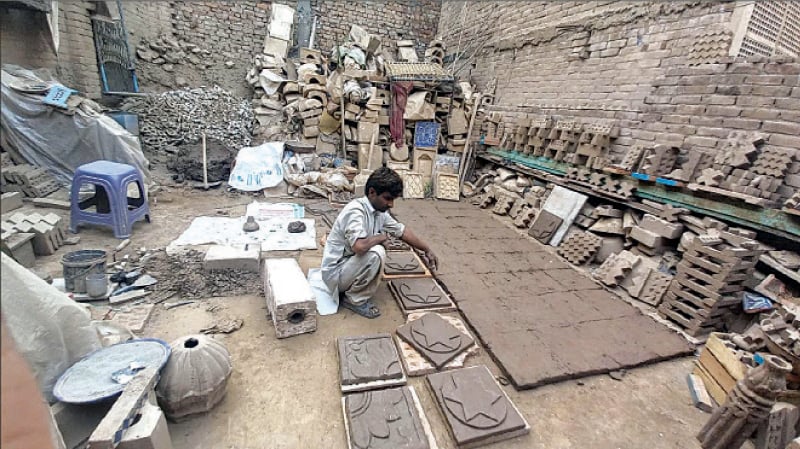
Clay is Shaped
Red clay, sourced and prepared by hand, is formed into tiles, vessels, or architectural elements using moulds refined over generations.
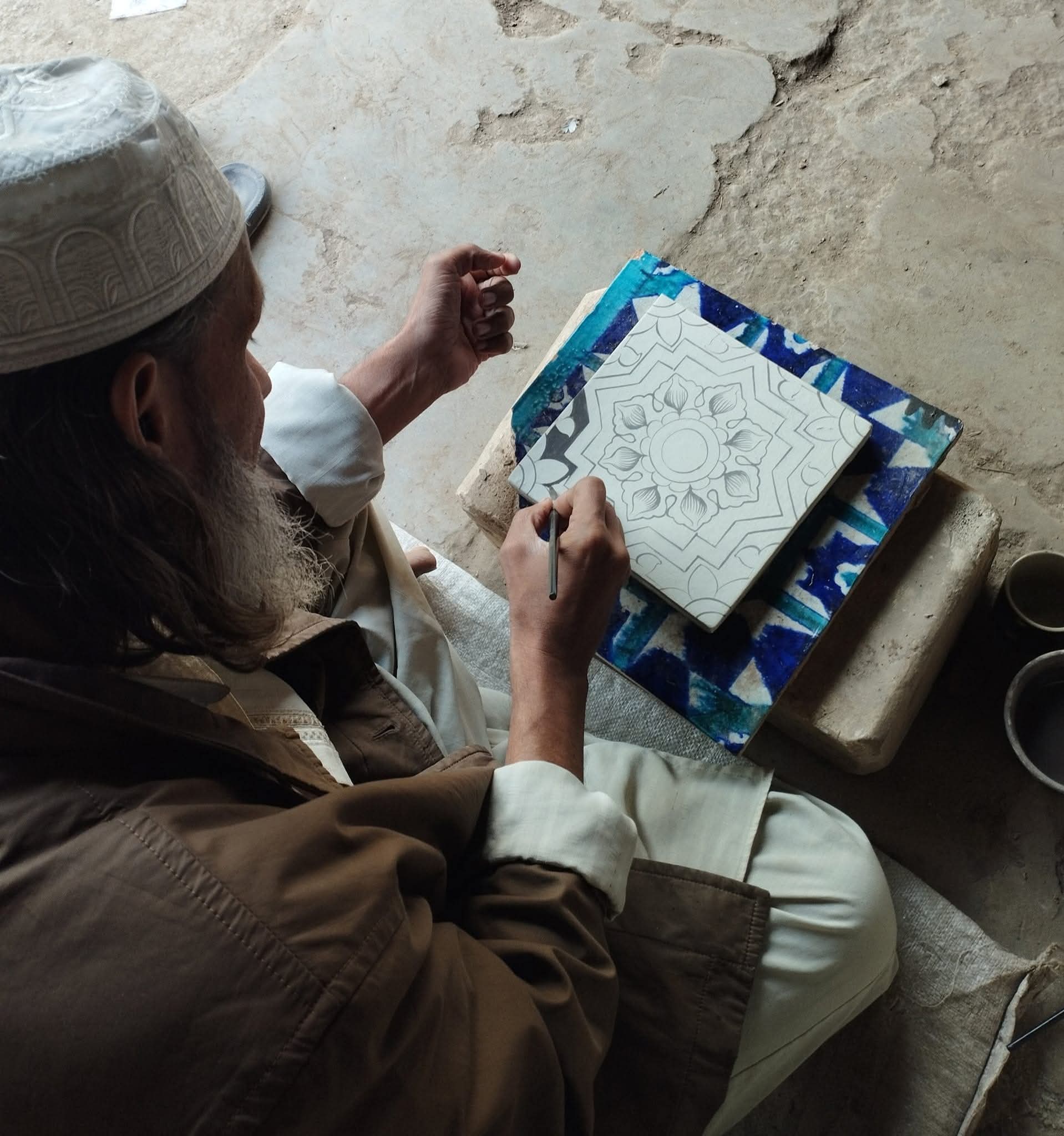
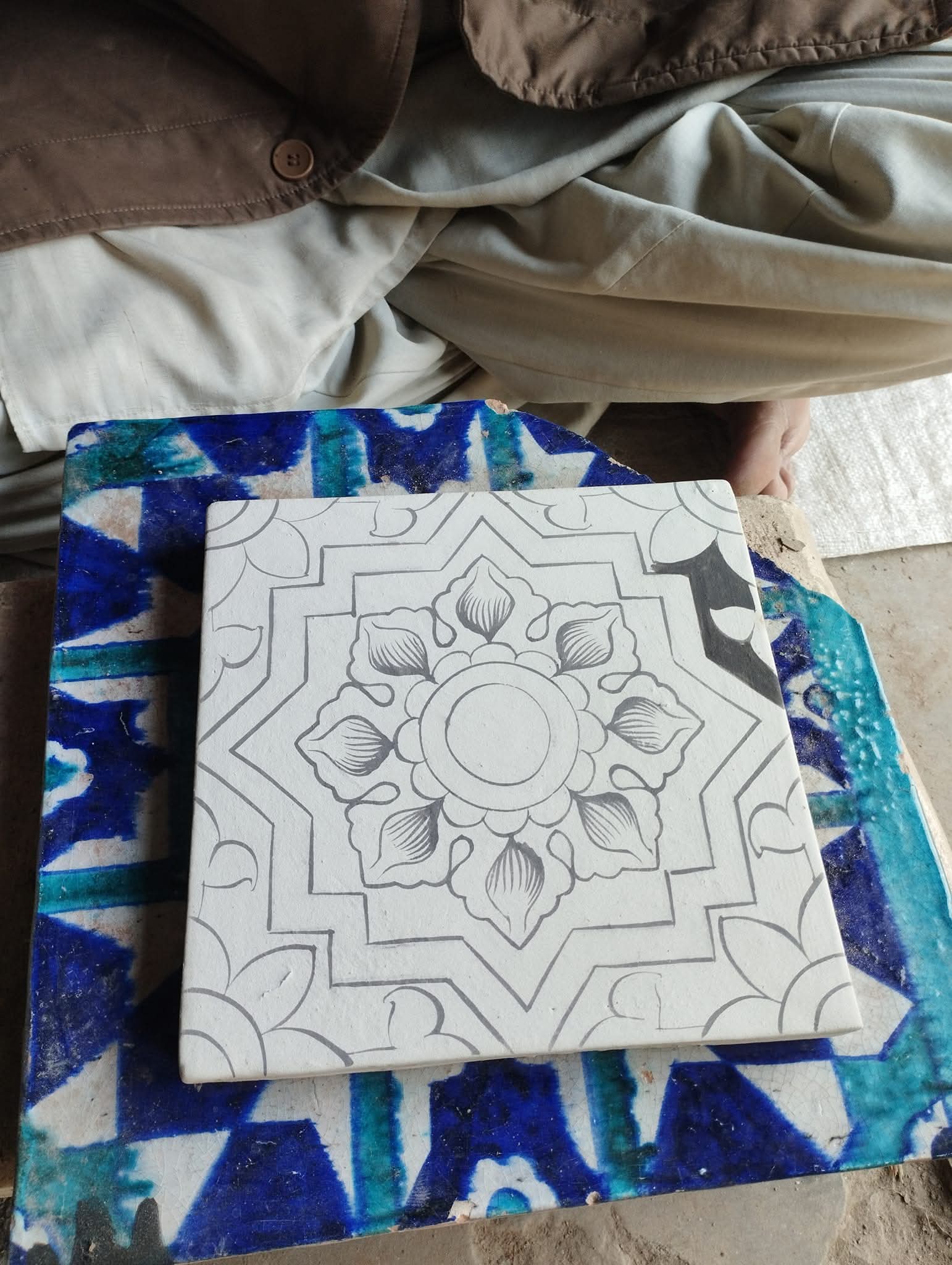
Design is Drawn
The craftsman draws arabesque geometric and floral patterns freehand using a fine stylus — no stencil, no machine. Each line is memory.
Pigment is Applied
Cobalt oxide (blue), tin oxide (white), and copper oxide (turquoise) pigments are filled into the drawn grooves by hand.
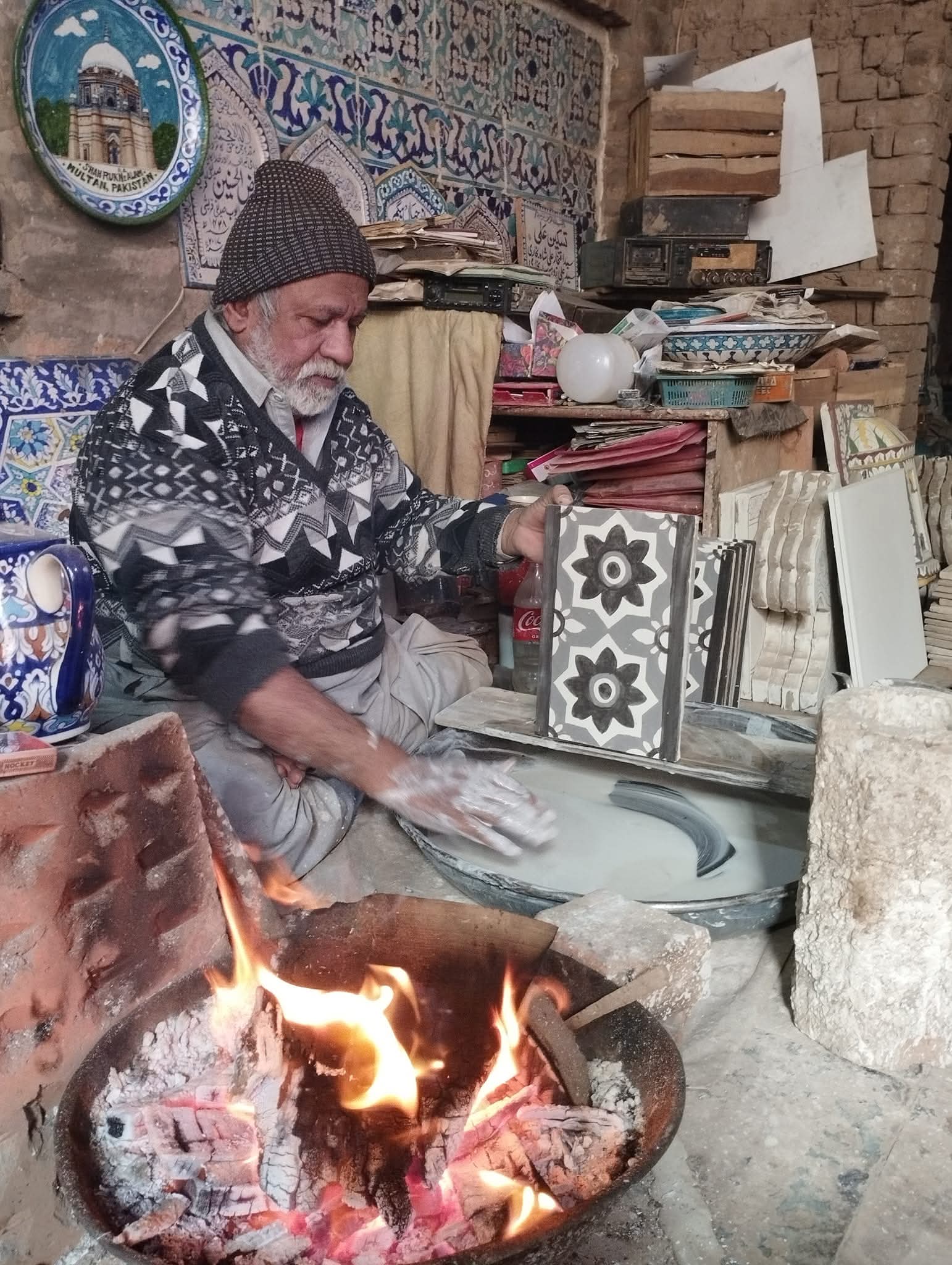
Glaze & Fire
A transparent glaze is applied over the pigments. The piece is kiln-fired at high temperature, fusing colour and glaze into the clay permanently.
Family Lineage
The Kashigar Dynasty
Seven generations of the Thaheem (Ansari) family — a 300-year lineage of master craftsmen.
Est. 17th Century
The family tradition begins.
3rd – 4th Generation
Multiple branches of the family flourish simultaneously.
5th Generation
Aga Khan Award for Architecture (1984) for the restoration of Hazrat Shah Rukn-e-Alam Mausoleum, Multan.
6th Generation
Born 1964. The sole remaining Kashigar using traditional red clay. Workshop: Jan Muhammad Colony, Multan.
7th Generation
Currently learning the family craft. Actively documenting Kashikari for a new audience.
Highest Recognition
The Aga Khan Award for Architecture
1984 — The world's most prestigious recognition of excellence in the built environment.
In 1984, the family workshop of Ustad Allah Diwaya — father of Muhammad Wajid — received the Aga Khan Award for Architecture, one of the world's most prestigious recognitions of excellence in architecture and the built environment.
The award was given for the family's contribution to the Restoration, Reproduction & Extension of the Hazrat Shah Rukn-e-Alam Mausoleum in Multan — a 14th-century Sufi shrine considered one of the finest examples of Timurid and Tughluq architecture in South Asia.
Muhammad Wajid, then a young apprentice, worked alongside his father on this landmark project. The experience shaped his commitment to authentic red clay Kashikari and monument-quality craftsmanship.
1984
Year Awarded
Restoration, Reproduction & Extension — Shah Rukn-e-Alam Mausoleum
Project Recognised
An Art at Risk
The Threat to Kashikari
The commercialisation of blue pottery and the decline of authentic instruction have pushed traditional Kashikari to the edge.
⬡
China Clay Replaces Red Clay
Commercial producers have switched to cheap, lightweight China clay. Unlike red clay, it cannot be used for the restoration of historical monuments — but it is far cheaper to produce.
◈
Institutions Lost Their Way
The Blue Pottery Institute of Multan — once a centre for authentic instruction — now, in Wajid's words, operates as a commercial entity, issuing diplomas without employing original artists.
◇
Family Abandonment
Of Ustad Allah Diwaya's seven sons, only Muhammad Wajid remained in the craft. His brothers moved to other occupations. The Soomro family — another historic Kashigar lineage — has had no active members for over a decade.
Wajid's Proposal
Ustad Muhammad Wajid has proposed a training facility for 25 students requiring four kanals of land from the government. He asks that the art be preserved by appointing authentic artists — not commercial instructors — to train the next generation.
“Art be preserved by appointing original artists, or this art will die.” — Ustad Muhammad Wajid